
Fire hardening for
North State homes.
Most homes lost to wildfire are ignited by embers, not the flame front. We find the places embers get in and the materials that catch first, then fix them with practical, code-aware construction.
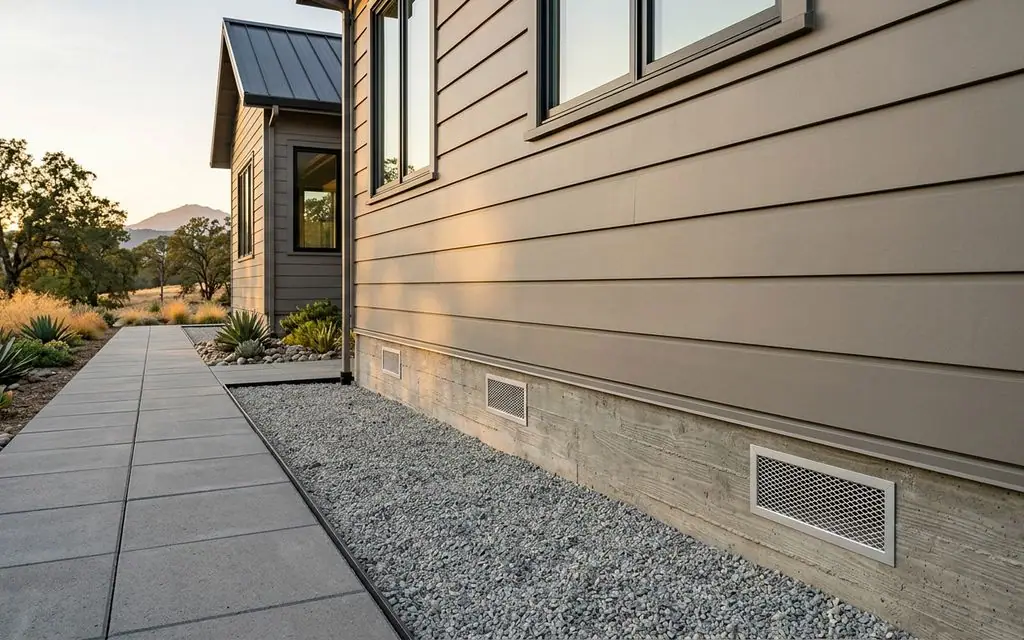
In Shasta County, wildfire resilience comes down to details: vents, enclosed eaves, siding and the bottom few inches of the wall, windows, decks, gutters, and the transitions where one material meets another. Hardening only works when every layer works, so we look at the whole exterior before recommending anything.
Some homeowners come to us through wildfire mitigation programs like CWMP. Others want to protect their home, improve insurability, or get ahead of fire season without waiting for a grant. We handle both, and we will tell you plainly which upgrades matter most for your house and which can wait.
What we harden
Ember entry points
Attic, crawlspace and gable vents, open eaves, gaps at the roof edge and garage door, and anywhere embers can get inside or collect.
Exterior walls & siding
Combustible siding and trim, the base of the wall, and the transitions that trap embers against the structure.
Windows & doors
Single-pane and non-tempered glass, vinyl frames that soften in heat, and doors and thresholds that leave gaps.
Decks & attachments
Class A fire-rated TimberTech or treated-cedar decking, protected framing and undersides, and fences or structures that connect fire directly to the house.
Choose what you need.
Ember-Resistant Vents
Vents are one of the most common ways embers get inside a home. Replacing them is often the highest-value hardening upgrade per dollar.
- Survey of every vent and opening on the structure
- Ember- and flame-resistant replacement vents (Vulcan and equivalent tested products)
- Foundation, crawlspace, gable, soffit and eave vents
- Sealing gaps at eave blocking, roof edges and penetrations
Siding, Soffits & Eaves
The exterior wall is the house's shield. We replace vulnerable siding, protect the base of the wall, and box or harden eaves so embers and heat have less to work with.
- Fiber cement and other ignition-resistant siding
- Noncombustible base-of-wall treatment
- Enclosed or hardened eaves and soffits
- Fascia, trim and corner details
Windows & Doors
Glass that breaks from heat lets embers straight inside. We replace vulnerable windows and doors and seal the gaps around them.
- Dual-pane windows with tempered glass
- Frame selection suited to wildfire exposure
- Solid-core and ignition-resistant exterior doors
- Weather stripping, door sweeps and noncombustible thresholds
Fire-Resistant Decks
A deck attached to the house can carry fire straight to the wall. We build and rebuild decks with Class A fire-rated materials: TimberTech composite or fire-retardant-treated cedar.
- Class A fire-rated TimberTech composite decking
- Class A fire-retardant-treated cedar decking
- Framing inspection and structural repair
- Under-deck enclosure or protection
Book any service on its own, or let one licensed team coordinate the house, the power and the property.
Common questions
What is home hardening?
Home hardening means upgrading the parts of a house most likely to ignite during a wildfire: vents, eaves, siding, windows, doors, decks and the area right against the house. The goal is to reduce the ways embers and radiant heat can ignite the structure. It does not make any home fireproof, but it can significantly reduce vulnerability.
Where should I start if I can't do everything at once?
Usually with ember entry points (vents and open eaves) and the first five feet around the house, because they are common ignition paths and often the most cost-effective fixes. During an assessment we rank the work so you can phase it sensibly.
Do you work with grant programs?
Yes. We work with wildfire mitigation programs like CWMP and understand how they operate. We also do private-pay hardening for homeowners who do not qualify or do not want to wait.
Will hardening lower my insurance?
Some insurers and the California FAIR Plan offer discounts for certain mitigation measures, and documentation can help at renewal. Discounts vary widely by carrier, so we document the work but do not promise a specific discount or insurance outcome.
Find out where your home is vulnerable.
Owner-led site visits. Clear recommendations. No pressure. Prefer to talk? Call or text (530) 440-5959.